Asheville Prison Books wants to facilitate a correspondence reading group with people who are in prison. The general plan is to select and source a book, figure out who will participate in this group, send them copies of the book, solicit their feedback on the reading, and then publish their material in a journal that we could then send back in to everyone who was involved in the reading group. We’ve never done this before, so we’re excited to hear peoples’ ideas. You do not need to be involved in Asheville Prison Books already to attend this meeting.
The meeting will be this Saturday (June 8th) at Firestorm Books & Coffee at 2:00PM.
The books we’ve selected is “Fire on the Mountain” by Terry Bisson, which is “an alternate history describing the world as it would have been had John Brown succeeded in his raid on Harper’s Ferry and touched off a slave rebellion in 1859, as he intended.”
April 27 @7-11pm – Special solo show w/ guitarist Ben Phan followed by UpCountry Brewery favorite Jarvis Jenkins! $5-10 suggested, no one turned away!
Saturday, April 27, 2019 @ 7-11 PM
$5-$10 suggested donation
UpCountry Brewing Company (1042 Haywood Road)
Join members of our project for a fabulous double bill with some of Asheville’s most talented musicians and some of Asheville’s most delicious beer!
7-9pm – Special solo show with guitarist Ben Phan 9-11pm – Brewery favorite Jarvis Jenkins
Please bring a paperback book or two to donate (may be used!); urban fiction, mystery/thriller, educational/trade books and dictionaries especially appreciated!
Catawba Brewing is releasing a new habenero mole porter this Thursday and $1 from each glass will be going to Asheville Prison Books! We’ll have a table at Catawba’s South Slope Tasting Room & Brewery at 32 Banks Avenue on Thursday evening (December 6th) if you want to stop by and say hi!
When you’ve amassed a personal library of hundreds of books over a lifetime, the tough process of passing those loved volumes on starts with the question: where should they end up?
When faced with this question, Orlando-based writer Mark I. Pinsky reached out to Asheville Prison Books. He chose our project because of his abiding connection to western North Carolina, and because he views prisons as one of the last places in the country where a deep engagement with books and reading continues to flourish.
In addition to pledging a donation of dozens (possibly as many as 100+) books, Pinksy also interviewed a volunteer about the work we do, and published the article in the Washington Independent Review of Books. The article below is excerpted with permission from the author. To read the original publication click here.
Letting Go, Setting Free
By Mark I. Pinksy August 24, 2018
Asheville Prison Books
For those of us of a certain age who have been regular or occasional reviewers or just book lovers, the sight of groaning shelves throughout the house can be troubling. It’s time to thin them out so they won’t be a burden to our kids — or get wasted at postmortem yard sales.
The brutal truth is that these hundreds of hardcovers and paperbacks, as much as they are beloved, need a new home, a place where they will be read by many — and equally loved. And a destination where the donation will not undermine royalties of fellow authors.
As we know, there aren’t many such places left, except for U.S. jails and prisons. In the United States, there are more than 2 million inmates serving time in federal, state, and county facilities.
Organizations like Asheville Prison Books (APB) have sprung up around the country. APB covers North and South Carolina prisons and gets 50-100 inmate requests a month. In the Southeast, Florida has its own affiliate in Pensacola, but Georgia does not. There are several national organizations for inmates from other states, where APB sends requests from outside the Carolinas.
Like many, APB is a shoestring operation, working out of Asheville’s Downtown Books & News and staffed entirely by volunteers.
The nonprofit collective was established in 1999. I chose to give my surplus books to APB because I like that part of the country, and one of my nonfiction books takes place in the area. So, on a late August trip to western North Carolina, I paid them a visit.
On a Saturday morning, I meet one of the volunteers. Their jerry-built office at the back is a cramped, donated 8’x10’ area — two walls are bookshelves — in the back of [Downtown Books and News], which sells used books and a wide array of periodicals. The volunteer calls [the bookstore’s] staff “allies of the program.”
The program, she explains, was a response to the dearth of prison-funded literacy and rehabilitation programs, which coincided with the explosion in prison populations and the simultaneous reduction of resources.
“I think it’s great that people want to support Asheville Prison Books by donating books and money and time,” the volunteer says, largely “because they have severe criticism of mass incarceration.”
Donated paperbacks less than two inches thick, most used, but some new, are sent in parcels of two to inmates who request specific titles, authors, or subject areas. A rotating cast of six to eight volunteers fills the requests in the tiny office and sends them to a larger venue where more volunteers wrap them for shipment.
When the inmates finish the books, they pass them along to friends — since most institutions limit the number that can be kept in cells — so the majority ultimately end up in prison libraries.
The most popular titles are dictionaries (especially Spanish-English), vocational, and educational, including language instruction and study guides for the GED. Also, books by and for people of color.
There are restricted categories, too: porn and “incitement” — the latter of which can be interpreted broadly, if not capriciously, by prison authorities.
One once-banned title was The New Jim Crow: Mass Incarceration in the Age of Colorblindness by Michelle Alexander. The ban was ended when the ACLU filed suit against the North Carolina prison system. When the title was allowed, a Christian community partner “Faith 4 Justice” purchased a number of new copies at cost from another bookstore around the corner from Broadway Books, Malaprop’s.
What the project needs most now, the volunteer says, is money to cover postage.
Back home in Orlando, the actual process of culling and shipping the books off to Asheville is turning out to be more emotional for me than I had imagined, entailing a certain amount of psychologically letting go.
As with many of life’s challenges and crises, I approach the culling in stages. So, I’m starting to fill boxes with books for people who will love them, too.
Orlando-based freelance writer Mark I. Pinsky is the author of five nonfiction books, most recently Met Her on the Mountain: A Forty-Year Quest to Solve the Appalachian Cold-Case Murder of Nancy Morgan (John Blair).
As reported in in May, Big House Books based in Mississippi sued MS DOC for banning donated/free books from coming into MS prisons. We found out this week that they WON their lawsuit!
This is great news for everyone and MS and beyond! And given similar wins at the federal level and right here in NC, it’s safe to say that prison administrators are on notice that messing with incarcerated people’s access to books is NOT GOING TO FLY.
As always, there is more work to do–but today, we celebrate and heartily congratulate Big House Books for this win!!
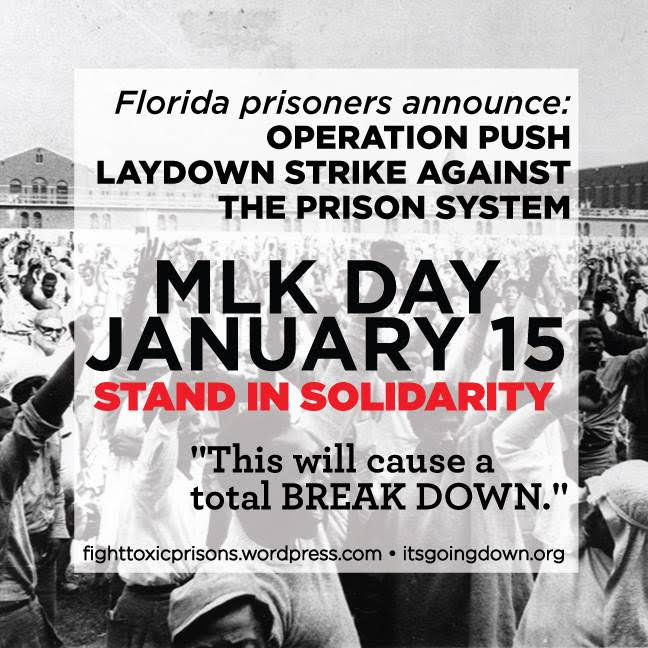
After seven people were killed in a South Carolina prison earlier this year, Jailhouse Laywers Speak (a national collective of incarcerated people who fight for human rights by providing other incarcerated people with access to legal education, resources, and assistance) put out a press release calling for a two-week national strike beginning on August 21st, the anniversary of George Jackson’s assassination, and extending until September 9th, the anniversary of the Attica Prison Rebellion in 1971.
This strike is already being met with repression. People have been transferred around to other facilities and communication has been restricted. Facilities will be put on lockdown as they have during strikes for the past couple of years. Last year, the entire Florida DOC locked down.
Bringing more visibility to this movement will help combat the repression. Prison officials will be more hesitant with the public’s eyes on them and will be less likely to mess with particular prisoners if they have outside support. This is one reason Asheville Prison Books is endorsing the national prison strike. We encourage you to spread the word about the strike. Post about it on social media and try to get news outlets to cover it. Have your organization endorse the strike. Start corresponding and building relationships with people inside.
We are also endorsing the strike because we believe it’s necessary to support the movements that are attempting to transform the prison conditions that we work to mitigate every day: The lack of resources, the sense of isolation and boredom, the dehumanization and despair that comes with being viewed as disposable, and the physical danger and emotional trauma that comes along with the consequences of that disposability.
The demands of the strike speak directly to these realities, including basic things such as “prison policies that recognize the humanity of imprisoned men and women,” and “recognition of voting rights.” The demands also include things near to the hearts of many in this network, such as reinstatement of Pell Grants and access to rehabilitation services. You can find the full list of demands and the press release announcing the strike below.
We’ll also be holding our monthly volunteer orientation this Sunday, July 15th, at 1:00PM also at Firestorm. Please come to the orientation if you’re interested in supporting the strike but can’t make it to the meeting on Tuesday.
Press release from Jailhouse Lawyers Speak:
Men and women incarcerated in prisons across the nation declare a nationwide strike in response to the riot in Lee Correctional Institution, a maximum security prison in South Carolina. Seven comrades lost their lives during a senseless uprising that could have been avoided had the prison not been so overcrowded from the greed wrought by mass incarceration and a lack of respect for human life that is embedded in our nation’s penal ideology.
These men and women are demanding humane living conditions, access to rehabilitation, sentencing reform and the end of modern day slavery.
These are the NATIONAL DEMANDS of the men and women in federal, immigration and state prisons:
Immediate improvements to the conditions of prisons and prison policies that recognize the humanity of imprisoned men and women.
An immediate end to prison slavery. All persons imprisoned in any place of detention under United States jurisdiction must be paid the prevailing wage in their state or territory for their labor.
Rescission of the Prison Litigation Reform Act, allowing imprisoned humans a proper channel to address grievances and violations of their rights.
Rescission of the Truth in Sentencing Act and the Sentencing Reform Act so that imprisoned humans have a possibility of rehabilitation and parole. No human shall be sentenced to death by incarceration or serve any sentence without the possibility of parole.
An immediate end to the racial overcharging, over-sentencing and parole denials of Black and brown humans. Black humans shall no longer be denied parole because the victim of the crime was white, which is a particular problem in Southern states.
An immediate end to racist gang enhancement laws targeting Black and Brown humans.
No denial of access to rehabilitation programs for imprisoned humans at their place of detention because of their label as a violent offender.
State prisons must be funded specifically to offer more rehabilitation services.
Reinstatement of Pell grant eligibility to prisoners in all US states and territories.
Recognition of voting rights for all confined citizens serving prison sentences, pretrial detainees and so-called “ex-felons.” Their votes must be counted. Representation is demanded. All voices count!
We all agree to spread this strike throughout the prisons of Ameri¢¢¢a! From Aug. 21 to Sept. 9, 2018, men and women in prisons across the nation will strike in the following manner:
Work Strikes: Prisoners will not report to assigned jobs. Each place of detention will determine how long its strike will last. Some of these strikes may translate into a local list of demands designed to improve conditions and reduce harm within the prison.
Sit-ins: In certain prisons, men and women will engage in peaceful sit-in protests.
Boycotts: All spending should be halted. We ask those outside the walls not to make financial judgments for those inside. Men and women on the inside will inform you if they are participating in this boycott. We support the call of the Free Alabama Movement Campaign to “Redistribute the Pain” 2018, as Bennu Hannibal Ra-Sun, formerly known as Melvin Ray, has laid out – with the exception of refusing visitation. See these principles described here: https://redistributethepain.wordpress.com/.
Hunger Strikes: Men and women shall refuse to eat.
How you can help:
Make the nation take a look at our demands. Demand action on our demands by contacting your local, state and federal political representatives with these demands. Ask them where they stand.
Spread the strike and word of the strike in every place of detention.
Contact a supporting local organization to see how you can be supportive. If you are unsure of who to connect with, email millionsforprisonersmarch@gmail.com.
Be prepared by making contact with people in prison, family members of prisoners and prisoner support organizations in your state to assist in notifying the public and media on strike conditions.
Assist in our announced initiatives to have the votes of people in jail and prison counted in elections.
A books-to-prisons project in Mississippi called Big House Books fights the good fight against arbitrary and inhumane restrictions on access to free books!
Arbitrary and discriminatory restrictions
Up until last year, Big House Books–a project very similar to Asheville Prison Books–had been sending free reading material in South Mississippi Correctional Institution (SMCI), located in Leakesville, with no problems.
Then one day, out of the blue, individuals who normally received books from BHB were told by prison administrators that they could no longer receive free, secular books.
That’s right: they could continue to receive free books if they were “religious,” while all other books had to be paid for.
Fighting back!
But those incarcerated at the facility didn’t give up; they decided to fight.
First, they tried to resolve the issue utilizing the prison’s mandatory internal grievance process, but to no avail. Their concerns were rebuffed by prison officials, who, after all, had crafted the mean-spirited policy in the first place.
But two incarcerated individuals were willing to stand their ground and risk retaliation by becoming named plaintiffs in a lawsuit. Charles Owens and Jess Green reached out to Big House Books to help them challenge this irrational, cruel policy, and BHB secured the assistance of a legal advocacy group called the Mississippi Center for Justice (MCJ).
MCJ wrote the formal legal complaint and filed a lawsuit in federal court alleging that the new prison book policy violates incarcerated people’s First and 14th Amendment rights.
Hitting a little too close to home
We’ll be watching closely to see what happens in this case, as we are dealing at this moment with an identical situation in North Carolina.
Just a couple months ago, administrators at Alexander Correctional Institute in Taylorsville, NC got it in to their heads that free and donated books should no longer be permitted to send into the facility.
Asheville Prison Books investigated the reasons. At first, we were told that it was part of an effort to combat the introduction of contraband into the facility, but when questioned as to whether APB had ever been accused of sending in contraband, Assistant Superintendent Eric Dye acknowledged that, no, we had always operated in good faith.
Additionally, Mr. Dye even stated that the prison “really appreciated” our work. If that is the case, why are they doing everything in their power to hinder it?
Furthermore, when pressed to give a legitimate reason for the ban, Dye changed his answer from “contraband” to “It’s just too many books! They’re a nuisance!”
So the truth comes out. The reason they are no longer allowing donated books has nothing to do with contraband or security; it is because they don’t feel like doing their jobs, which is to sort and distribute prisoner mail.
We don’t accept their bogus claims!
This is simply absurd. AXCI’s decision is a mean-spirited, punitive action poorly disguised as a “security” measure.
Well, the folks at SMCI weren’t fooled, and neither was Big House Books, and neither are we! Asheville Prison Books is committed to challenging this policy. We applaud BHB for their advocacy, and will certainly be taking a page out of their book (and then sending that book into AXCI!) in the coming weeks and months.
We need your help!
Please call Alexander CI and tell them you want them to change this policy! Five minutes of your time goes A LONG WAY to helping these folks keep a key mental, emotional and education resource at their disposal.
The prison number is (828) 632-1331 and Eric Dye’s extension is x1502. Ask to speak with Assistant Superintendent Eric Dye, or to leave a message with this receptionist.
Say you are calling because you heard about the new policy disallowing donated books into the prison and you are very concerned about the gap in access this will create. Say you would like to see the policy changed or something worked out so that people and organizations can still donate free books.
If you make a call please let us know what kind of response you get! Hit us up any time at ashevilleprisonbooks@gmail.com
Corey Scott, Eddie Casey Gaskins, Raymond Angelo Scott, Damonte Rivera, Michael Milledge, Cornelius McClary and Joshua Jenkins were killed and 22 prisoners wounded in a rebellion at the Lee Correctional Institution late Sunday and early Monday, April 15-16, 2018, in Bishopville, S.C.
Yes, it was a gang fight, prisoners tell me, but it was corrections officials who had decided to house rival gangs in the same dormitory, and it was the officials’ increasingly punitive policies that exacerbated tensions on the inside. The fact that the rioting went on for seven hours, and that so many died and were injured — 22 were taken to the hospital — was, they say, in no small part because corrections officers were AWOL.
Notably, it is contraband cellphones that make it possible for these prisoners to get their own accounts of the riot to the public, as well as to document their claim that corrections officials could have prevented the high death toll. … Then there was the video a prisoner sent me of the putrid water coming out of the sink of his cell — water, another man told me, that it “smells like feces.” … And they want us all to know that cellphones don’t just help them to tell the public about abuses in the system; cellphones also tether them to family, which should matter to all of us. (Prisons have phones inmates can use, but they are controlled by private companies that charge usurious rates.) As one man explained to me, every night he calls his daughter to help her with her homework. He is trying hard to be a good father even though he is locked up. The state is telling us that the inmates fight over cellphones, but this man told me he willingly shares his phone so others can reach out to their families, and that this practice is common.
Men and women incarcerated in prisons across the nation declare a nationwide strike in response to the riot in Lee Correctional Institution, a maximum security prison in South Carolina. Seven comrades lost their lives during a senseless uprising that could have been avoided had the prison not been so overcrowded from the greed wrought by mass incarceration and a lack of respect for human life that is embedded in our nation’s penal ideology.
These men and women are demanding humane living conditions, access to rehabilitation, sentencing reform and the end of modern day slavery.
These are the NATIONAL DEMANDS of the men and women in federal, immigration and state prisons:
Immediate improvements to the conditions of prisons and prison policies that recognize the humanity of imprisoned men and women.
An immediate end to prison slavery. All persons imprisoned in any place of detention under United States jurisdiction must be paid the prevailing wage in their state or territory for their labor.
Rescission of the Prison Litigation Reform Act, allowing imprisoned humans a proper channel to address grievances and violations of their rights.
Rescission of the Truth in Sentencing Act and the Sentencing Reform Act so that imprisoned humans have a possibility of rehabilitation and parole. No human shall be sentenced to death by incarceration or serve any sentence without the possibility of parole.
An immediate end to the racial overcharging, over-sentencing and parole denials of Black and brown humans. Black humans shall no longer be denied parole because the victim of the crime was white, which is a particular problem in Southern states.
An immediate end to racist gang enhancement laws targeting Black and Brown humans.
No denial of access to rehabilitation programs for imprisoned humans at their place of detention because of their label as a violent offender.
State prisons must be funded specifically to offer more rehabilitation services.
Reinstatement of Pell grant eligibility to prisoners in all US states and territories.
Recognition of voting rights for all confined citizens serving prison sentences, pretrial detainees and so-called “ex-felons.” Their votes must be counted. Representation is demanded. All voices count!
We all agree to spread this strike throughout the prisons of Amerikkka! From Aug. 21 to Sept. 9, 2018, men and women in prisons across the nation will strike in the following manner:
Work Strikes: Prisoners will not report to assigned jobs. Each place of detention will determine how long its strike will last. Some of these strikes may translate into a local list of demands designed to improve conditions and reduce harm within the prison.
Sit-ins: In certain prisons, men and women will engage in peaceful sit-in protests.
Boycotts: All spending should be halted. We ask those outside the walls not to make financial judgments for those inside. Men and women on the inside will inform you if they are participating in this boycott. We support the call of the Free Alabama Movement Campaign to “Redistribute the Pain” 2018, as Bennu Hannibal Ra-Sun, formerly known as Melvin Ray, has laid out – with the exception of refusing visitation. See these principles described here: https://redistributethepain.wordpress.com/.
Hunger Strikes: Men and women shall refuse to eat.
How you can help:
Make the nation take a look at our demands. Demand action on our demands by contacting your local, state and federal political representatives with these demands. Ask them where they stand.
Spread the strike and word of the strike in every place of detention.
Contact a supporting local organization to see how you can be supportive. If you are unsure of who to connect with, email millionsforprisonersmarch@gmail.com.
Be prepared by making contact with people in prison, family members of prisoners and prisoner support organizations in your state to assist in notifying the public and media on strike conditions.
Assist in our announced initiatives to have the votes of people in jail and prison counted in elections.
On April 1 we tabled at the Asheville Anarchist Rad Fair, an outdoor gathering of local projects run by anarchists/anti-authoritarians that do a wide variety of excellent work in our community, from prisoner solidarity and support to grassroots organizing to community self defense, medical solidarity, and more!
The sun was shining (so hard in fact that we got our first sunburns of the year!) and people were in good spirits as they strolled by with kids and dogs in tow. Many of them stopped at our table to sign up as volunteers and chat about prison reform and abolition.
We got to have conversations we don’t normally have with people we don’t normally meet, while strengthening connections with the other rad projects in town–in other words, it was a huge success!
AARF! happens each first Sunday of the month over the warm spring and summer months. Missed the first one? No worries! Your next chance is May 6, so save the date!
Got a project and want to table at the next AARF!? Get in touch!
AVL Prison Books is 100% volunteer run. We only have one real expense: postage. Every month we get between 100-200 requests for books, and each package costs about 3 dollars to mail. So every contribution is necessary and warmly appreciated–by our collective, sure, but most of all by the folks who receive these books!
Currently we have four boxes of book packages sitting around waiting to be mailed out; a donation of just $10 gets three of those packages out in to the world!